

How To Clean Feathers Without Ruining Them
Sanitizing Feathers for Crafts
22 Mon Jul 2022
by Dara Trahan, July 2022; links updated August 2022
If you are reading this it is probably considering you take been scouring the spider web for a definitive answer on how to safely clean and sanitize bird feathers. Possibly yous've been getting a lot of conflicting propose.
Commencement, allow me assure yous, your mother was right when she told you lot non to pick upwardly that plumage off the ground, that it carried germs.
Feather can and do carry all kinds of things, including parasites, fungus, harmful bacteria and viruses.
As a crafter, we notice it very convenient to utilise what we take on mitt or can acquire from relatively inexpensive sources. And so when that farmer nosotros know offers some feathers from a chicken that had an unfortunate incident with a car? The tempation to say, "Yes!," is irresistable.
In the example of feathers, that tempation can besides be dangerous unless precautions are taken. It tin also get you into hot h2o with authorities and customs agencies if you don't know the rules for harvesting and shipping them.
The following information contains the steps I take to insure my feathers are prophylactic, clean, soft, pretty and, of course, legal:
- Know your source and the rules: Using that pretty plumage you observe on the footing in your arts and crafts is tempting, but is it legal? There are laws in the U.S. that forbid the harvesting and utilize of migitory bird feathers and raptor feathers. See this article up at the Department of the Interior site: http://www.fws.gov/migratorybirds/mbpermits.html . The gist is that it doesn't thing that you found the feather, it is a violation to have it in your possession (with rare exceptions). So its all-time to stick with domesticated species, unless you are positive the feather is from a non-migratory, legally harvested bird, (example: a turkey taken with a permit during turkey flavor). Some countries also prohibit the importation of feathers or require proof of proper sanitization. Know the rules or at least make your buyer aware that there may be custom prohibitions before selling/shipping internationally.
- Birds comport parasites such as mites and lice and despite what you lot have read elsewhere just freezing them for awhile may non do the fox. Some bird mites volition infest homes (and the humans who live in them!). Meet the Bird Mite Org for details: http://birdmites.org/ . The best fashion to deal with these little critters? Impale them *before* you bring them into your home. Take a handful of modern mothballs – the kind with paradichlorobenzene – and place them in an air tight container. Add the feathers. Store the container exterior the domicile for at to the lowest degree 24 hours. Note! Mothballs can be dangerous to pets, kids and wild animals then be careful of the storage location!
- One time the pesticide has done its work we want to take care of any leaner and viruses. Feathers can hold everything from salmonella to w nile virus to influenza (and more). Later removing the feathers from the closed container, I soak them for at least a one-half 60 minutes in a 50/fifty mixture of Isopropyl alcohol and hydrogen peroxide. This mixture will kill the bacteria and return most viruses inactive (y'all can't impale viruses as they are not live). I say *nigh*, considering some viruses may not be suspectible, just the ones we are most worried well-nigh, like the flu, are suspectible. Bleach is more effective, but volition make feathers brittle and tin diminish their colour. Hydrogen Peroxide not but oxidizes bacteria to expiry, but serves to brighten upwards your feathers without leaving them brittle. Note: The higher the concentration of alcohol or hydrogen peroxide the better.
- After their soak, I handwash the feathers in a mild mitt soap. I gently suds up each feather, making sure to remove any remaining stains or debris with my fingers, and then gently swish them in a basin of water. This step too removes any remaining chemicals or oil that may be on the feathers while keeping them soft to the touch. You will find this step uncommonly necessary for feathers that accept been at the bottom of a cage as soaking alone won't become rid of the spent seed husks and other (more than disgusting) things clinging to the feathers.
- I and so put them in a pan in a warm sunny place to dry before fluffing them a bit. Information technology is important that they dry quickly to avoid any fungal or mold infestations. Yous can apply a hair dyer and kid's toothbrush to speed upwards the process if desired.
- Finally, I store the feathers in an airtight ziplock bag in a dry identify until utilize.
One terminal notation, while I've used this procedure successfully on pheasant, chicken, turkey, cockatoo, pigeon and fifty-fifty peacock feathers, delicate fluffy feathers, such every bit Ostrich, are very hard to "re-fluff" in the finish. It'due south better to discover a safe commercial source for very frail feathers.
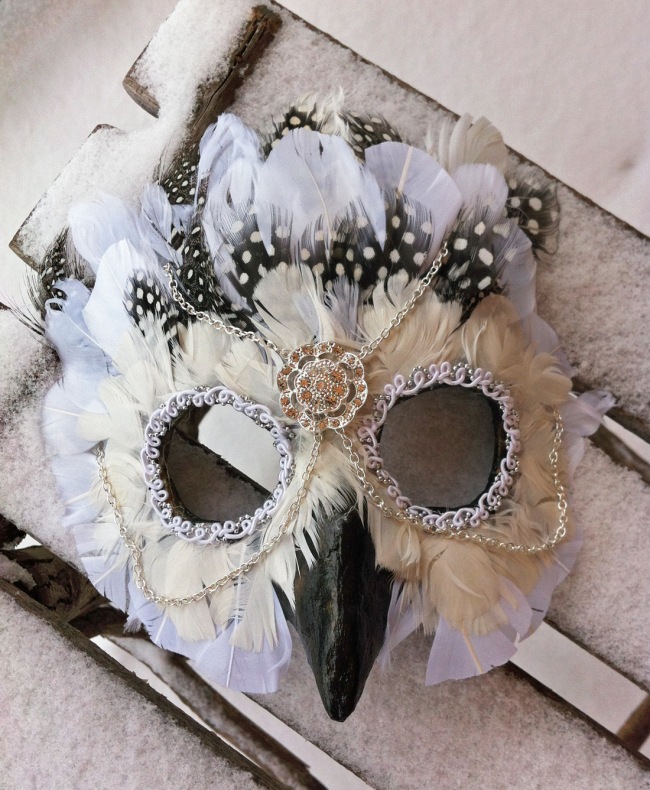
Happy Crafting and I hope this was helpful! What do some of the final results of this process look similar? Here'south a mask I made with turkey feathers obtained from a local subcontract: http://daragallery.deviantart.com/art/Bird-Masquerade-Mask-by-Dara-Trahan-384649324. And here are sanitized cockatoo feathers: https://world wide web.etsy.com/transaction/112807187?.

Source: https://daragallery.wordpress.com/2013/07/22/sanitizing-feathers-for-crafts/
Posted by: massingillglelavold.blogspot.com
0 Response to "How To Clean Feathers Without Ruining Them"
Post a Comment